Lower Back Pain and Yoga: Start with Stretching, Build Strength
By Nagendra Singh Thakur | Yoga Instructor at Kshiti Yoga Studio
Lower back pain is a common problem today. People who sit for long hours at a desk, cyclists, athletes and people who work out in the gym may all experience back stiffness or discomfort.
But why does lower back pain happen? And can yoga help?
In my experience as a yoga teacher, I have found that many people with mild lower back discomfort also have tight hamstrings, stiff hips or tight glute muscles. This does not mean these are always the cause of back pain. There can be many reasons, including long hours of sitting, reduced muscle strength, injuries and problems affecting the spine.
My approach is simple: start with basic stretching and comfortable movement, then gradually build strength in the back, core, hips and glutes. I also explore anti-gravity yoga with suitable students as one possible part of their practice.
Let's understand this approach and what medical research says about it.
1. Can Tight Hamstrings and Hips Contribute to Lower Back Pain?
The hamstrings are the muscles at the back of your thighs. The glutes are the muscles around your buttocks, while several other muscles help control movement around your hips.
During my teaching experience, I have often noticed tightness in these areas among students who also complain of mild lower back discomfort.
Think about people who spend most of their day sitting. They may have limited movement throughout the day and feel stiff when they stand up, bend forward or try to stretch.
However, tight muscles do not automatically mean that they are causing back pain. Some people with tight hamstrings have no back pain at all, while others may experience back pain without noticeable tightness.
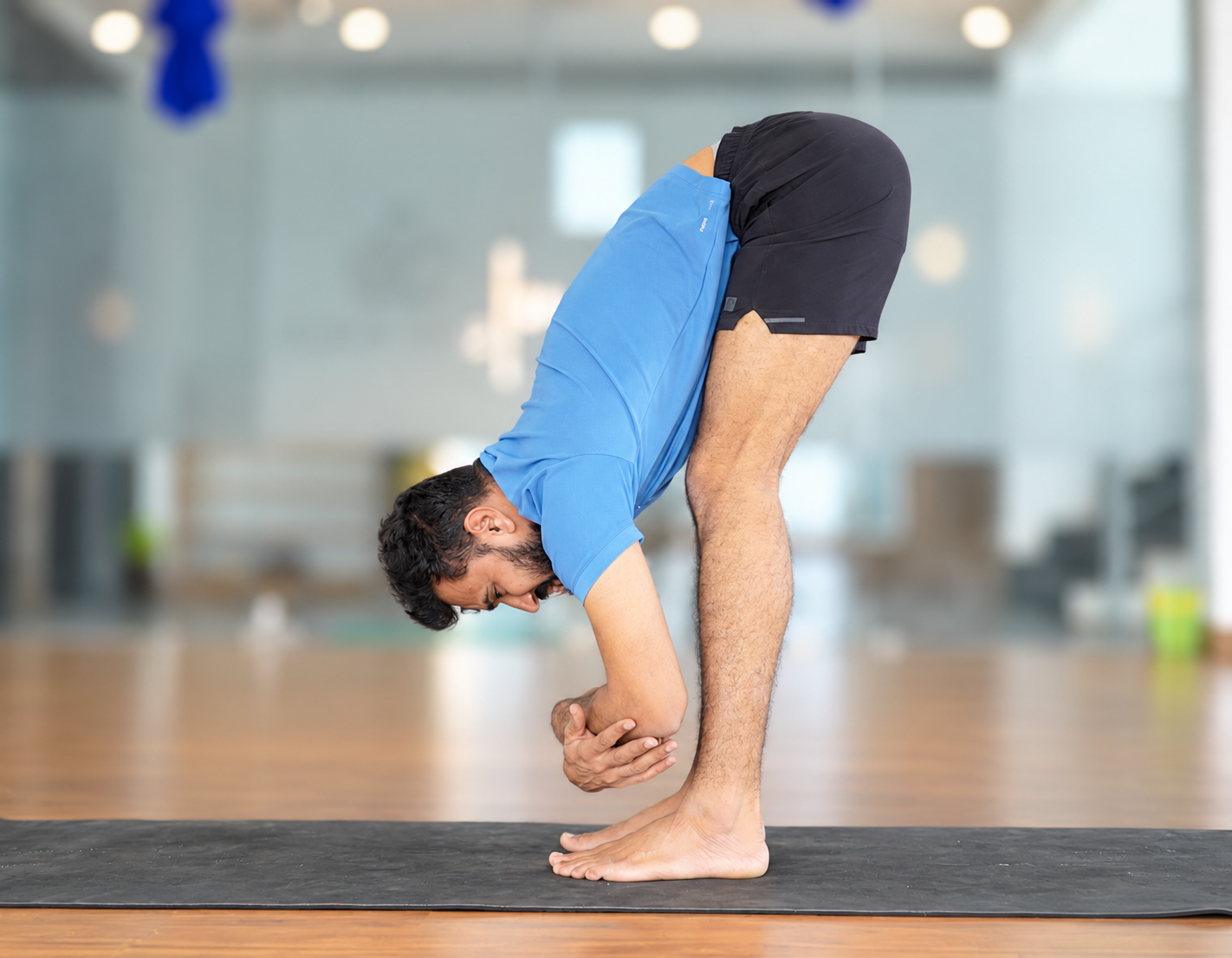
Still, improving hip and hamstring mobility can be a useful part of an exercise programme when these movements are limited or uncomfortable.
The aim is not simply to touch your toes. It is to help your body move comfortably and prepare for more demanding activities.
2. Start with Basic Stretching and Gentle Movement
When someone has mild lower back discomfort, I prefer starting with simple movements rather than immediately introducing intense yoga flows or advanced postures.
Depending on the person's symptoms and ability, a gentle practice may include:
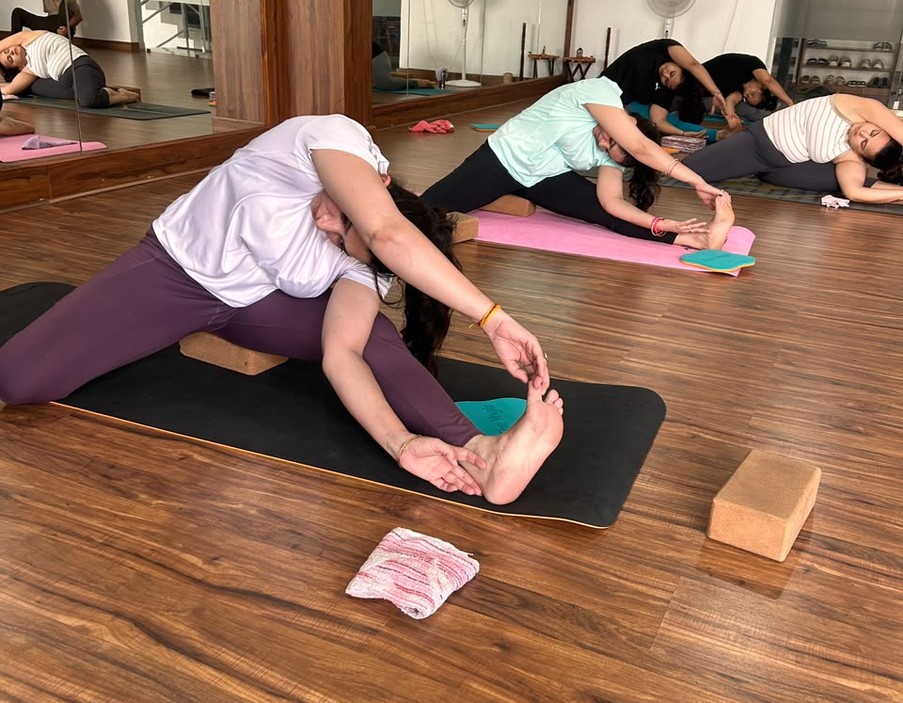
- Lying-down hamstring stretches: To gently work on the flexibility of the back of the thighs.
- Gentle hip and glute stretches: To explore comfortable movement around the hips.
- Supported Downward-Facing Dog: For people who can perform the posture comfortably without increasing their symptoms.
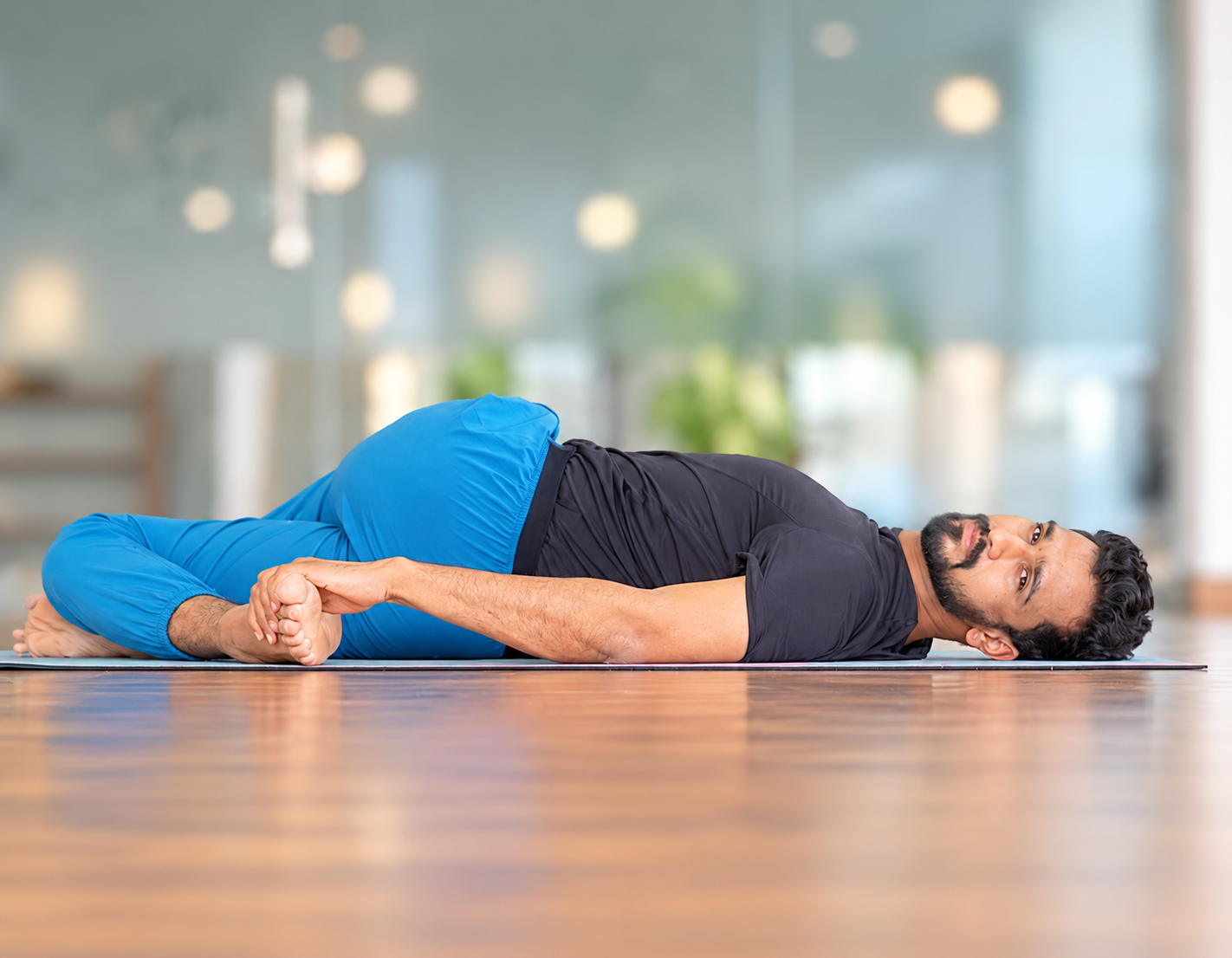
- Gentle spinal movements: Including comfortable lying-down twists when suitable.
The important thing is to avoid forcing the body into a deep stretch.
A stretch should not be treated as a test of flexibility. If a movement increases pain, especially pain travelling down the leg, it should be modified or stopped.
In my approach, basic stretching can be a starting point. From there, we can gradually introduce exercises that build strength and improve movement control.
3. Why Strengthening the Back and Core Matters
Stretching is only one part of the picture. We also need strength.
Your back and abdominal muscles work together to control the trunk during movement. Your glutes and hip muscles help you walk, bend, lift and perform many everyday activities.
If your goal is to improve how your body handles these activities, it makes sense to work on the strength and endurance of these muscle groups.
A balanced exercise programme may include:
Core strengthening: Exercises that help you control your trunk during movement.
Back strengthening: Suitable exercises that gradually build back muscle strength and endurance.
Glute and hip strengthening: Exercises that help improve hip control and support everyday movement.
Hamstring strengthening: Working on both strength and flexibility, according to your needs.
These muscles do not work separately. They work together whenever you move, lift an object, climb stairs or change position.
This is why I believe that improving lower back function should not be limited to stretching the painful area. We should also look at how the hips, glutes, core and back work together.
The key is to begin at a level you can manage and increase the difficulty gradually.
4. What Does Medical Research Say About Yoga and Lower Back Pain?
My observations come from working with students, but personal experience is only one part of the discussion. Medical research helps us understand what may be useful and where we need to be careful.
Several established medical guidelines recognise exercise as an option for managing lower back pain.
The World Health Organization (WHO) published guidelines in 2023 for managing chronic primary lower back pain. These guidelines include structured exercise programmes among the approaches that may be offered as part of care.
The American College of Physicians also recommends exercise and mind-body practices, including yoga, as options for people with chronic lower back pain.
Similarly, the National Institute for Health and Care Excellence (NICE) recommends considering exercise programmes for people with lower back pain, with or without sciatica. The programme should be appropriate to the person's needs and abilities.
What does this mean for us?
It supports the idea that suitable movement and exercise can be valuable parts of managing lower back pain. However, it does not mean that every yoga posture is appropriate for every person or that stretching alone will solve the problem.
It also reminds us that an exercise programme should be selected according to the individual, rather than assuming that everyone needs the same routine.
5. My Experience with Anti-Gravity Yoga and Hanging
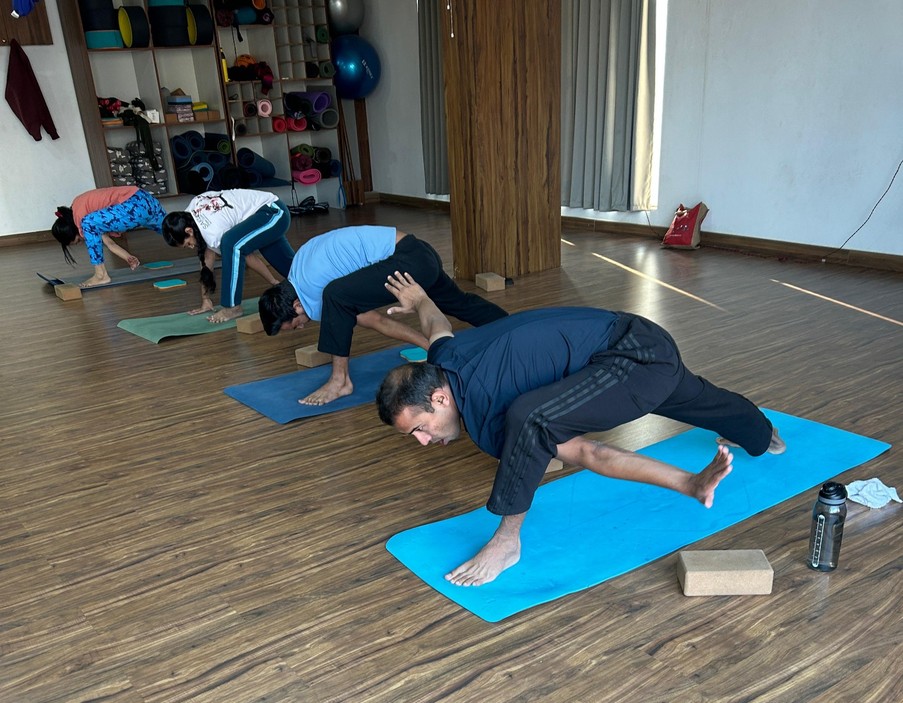
Along with regular yoga, I have explored anti-gravity yoga with some of my students.
In selected classes, we use a yoga hammock to support the body in different positions, including carefully controlled hanging and inversion practices.
From my experience, some students have reported feeling more relaxed or experiencing temporary relief after these practices. These observations have encouraged me to explore how supported movement and changes in body position may fit into a broader yoga practice.
One idea behind hanging and inversion is spinal unloading. In simple terms, changing how gravity acts on the body may temporarily change the forces placed on the spine.
Spinal traction has been studied as a possible way to manage certain types of back pain. However, the results are mixed, and research does not establish that hanging or inversion reliably creates lasting space between the vertebrae or fixes a disc bulge.
For example, NICE advises against using traction as a routine treatment for lower back pain with or without sciatica.
I therefore see anti-gravity yoga as an area worth discussing and exploring carefully, rather than a proven treatment for every type of back pain.
Hanging, inversion and adding weights to the hands are not suitable for everyone. They may place additional demands on the body and should not be attempted simply because someone has back pain. Appropriate assessment, suitable equipment, supervision and individual modifications are important.
My broader approach remains the same: work on comfortable movement, develop strength gradually and consider other practices only when they are appropriate for the individual.
6. Can Yoga Help with Sciatica or a Disc Bulge?
Sciatica usually refers to symptoms caused by irritation or compression of a nerve, often producing pain that travels from the lower back or buttock into the leg. Some people may also experience tingling, numbness or weakness.
A disc bulge is a finding involving one of the cushioning discs between the spinal bones. Not every disc bulge causes symptoms, and the presence of a disc bulge alone does not tell us which exercises a person should do.
For some people, carefully selected exercises may help maintain movement and improve their ability to manage everyday activities. For others, certain stretches, forward bends or inversions may aggravate their symptoms.
This is why I do not believe in giving everyone with back pain the same yoga sequence.
If you have sciatica, a diagnosed spinal condition or pain that travels down your leg, it is important to seek appropriate professional advice before trying demanding stretches, hanging or inversions.
Yoga can be part of an individual's wider movement and rehabilitation plan when suitable, but it should not replace medical assessment or treatment when these are needed.
7. My Approach: Mobility First, Strength Next
After years of teaching yoga, I believe that starting with the basics is often a sensible way to approach movement difficulties.
My approach to lower back discomfort focuses on four areas:
First, improve comfortable mobility. Work gently on the hamstrings, hips and glutes where restricted movement is present.
Second, build strength. Gradually strengthen the back, core and hip muscles according to the person's abilities.
Third, improve movement control. Practise movements that help the body handle everyday activities with greater confidence.
Fourth, progress carefully. Introduce more challenging exercises or specialised practices only when appropriate.
This is not a promise that every case of back pain can be resolved through yoga. Lower back pain has many possible causes, and some conditions need medical care or specialised rehabilitation.
Rather, this is the approach I use to help suitable students explore movement, improve strength and work towards better physical function.
I believe we should look beyond the painful area and consider the body as a whole. We should also recognise that progress takes time and that each person's needs are different.
8. Join Us at Kshiti Yoga Studio
If you experience mild back stiffness, want to improve your flexibility or are looking for ways to build strength, a suitable yoga practice may be worth exploring.
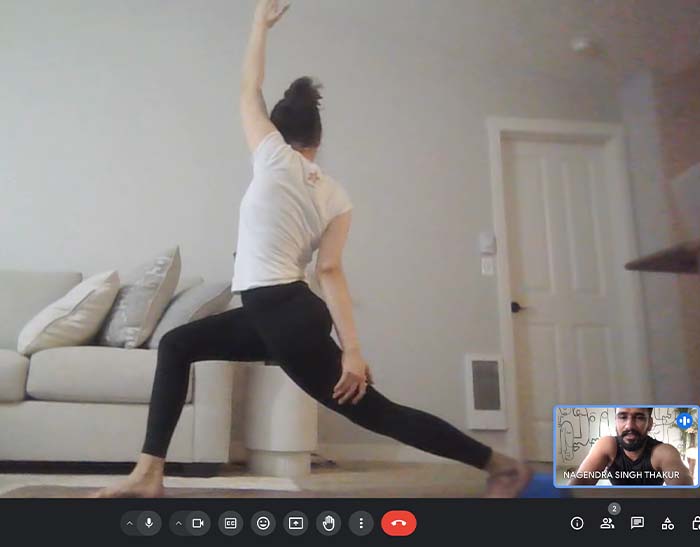
At Kshiti Yoga Studio, we offer online and offline yoga classes with an emphasis on mindful movement, mobility, strength and individual needs.
Depending on your goals and abilities, your practice may include gentle stretching, hip mobility, core strengthening, back and glute exercises, and different yoga styles.
If you have ongoing back pain or a diagnosed spinal condition, please consult an appropriate healthcare professional to understand which activities are suitable for you before beginning.
Interested in joining our online or offline classes? Get in touch with Kshiti Yoga Studio to learn more.
Kshiti Yoga Studio — Stretch. Transform. Heal.
References and Further Reading
- World Health Organization (WHO), 2023: WHO guideline for non-surgical management of chronic primary low back pain
- American College of Physicians, 2017: Non-invasive treatments for acute, subacute and chronic low back pain
- National Institute for Health and Care Excellence (NICE): Low back pain and sciatica in over 16s — recommendations
Disclaimer: This article shares general information and the author's experience as a yoga teacher. It is not intended to diagnose or treat a medical condition. Seek urgent medical attention for new bladder or bowel control problems, numbness around the groin or saddle area, or rapidly worsening or significant leg weakness.